

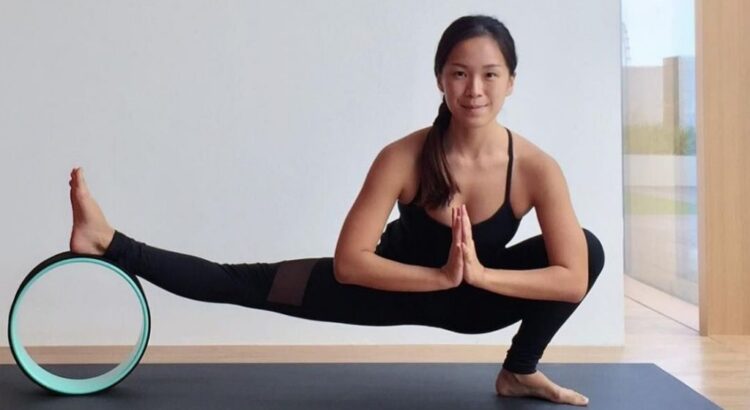
Many adults feel stiffness in the upper back, tightness across the chest, and discomfort from long hours of sitting. A prop-based class using a yoga wheel can be useful because the circular support helps students explore spinal extension, chest opening, shoulder mobility, and controlled movement in a more guided way than forcing backbends on the mat.
The yoga wheel is not just a stylish fitness prop. When used carefully, it can support the body, create feedback, and help students understand where they are tight or where they lack control. For people dealing with rounded posture, stiff upper backs, desk fatigue, or fear of backbends, the wheel can offer a more approachable way to explore movement.
Why Spinal Mobility Matters
The spine is designed to move in several directions. It bends forward, extends backward, twists, and side bends. Modern routines often limit that movement. People sit for long hours, look down at phones, lean toward laptops, and keep the upper back rounded.
Over time, the spine may feel stiff, especially around the thoracic region, which is the upper and middle back. When this area does not move well, the neck, shoulders, and lower back may compensate.
Yoga wheel practice can help students bring movement back into the spine, especially extension. The curved shape of the wheel supports the back as the student leans over it. This can feel more controlled than attempting unsupported backbends.
Chest Opening for Desk-Based Bodies
Long sitting and screen use often shorten the front of the body. The chest tightens, the shoulders round, and breathing may become shallow. A wheel-supported chest opener can help counter this pattern.
When the upper back is supported by the wheel, students can gently open across the chest and front shoulders. This may help improve posture awareness and breathing space.
The goal is not to push the ribs forward aggressively. A useful chest opener should feel spacious, not strained. Students should breathe steadily and adjust if the lower back feels compressed.
Why Support Matters in Backbending
Backbends can be intimidating because many students do not know where the movement should come from. Some people collapse into the lower back. Others tense the neck or grip the shoulders.
The yoga wheel provides support and feedback. It helps students feel the curve of the back and understand how to distribute movement. Instead of forcing a deep backbend, they can gradually roll over the wheel and pause where the body feels safe.
This support can make backbending less frightening, especially for beginners or people who feel stiff.
Core Control Is Still Important
A common mistake is thinking the wheel does all the work. It does not. Students still need core control, leg stability, and breath awareness. Without control, the body may collapse into the prop.
For example, when rolling over the wheel, the student needs to keep the feet grounded, engage the legs, and control the movement with the core. This prevents the lower back from taking too much pressure.
The wheel supports the movement, but the student still needs to participate intelligently.
Shoulder Mobility and Awareness
The yoga wheel can also help students explore shoulder mobility. Some poses involve reaching the arms overhead while the upper back is supported. This can reveal tightness in the chest, shoulders, and side body.
However, shoulder work should be gradual. Students should not force the arms into a range that creates pinching or numbness. If the shoulders feel restricted, the arms can stay lower or wider.
A teacher’s guidance is useful because shoulder alignment can change the entire experience of the pose.
Breathing While Using the Wheel
Breath is important in every yoga practice, but it becomes especially useful during wheel-supported postures. Many students hold the breath when they feel unsure or when the chest is opening deeply.
A steady breath helps the nervous system relax. It also helps students notice whether they are pushing too far. If breathing becomes difficult, the posture may need to be reduced.
In a chest-opening pose, students should focus on slow, controlled breathing rather than chasing depth.
Avoiding Lower Back Compression
One of the biggest safety concerns in backbending is lower back compression. This can happen when the upper back is stiff and the body bends mostly from the lumbar spine.
The yoga wheel can help when placed and used correctly, but poor setup can still create strain. Students should learn how to position the wheel, ground the feet, and use the core.
If there is sharp pain, pinching, or pressure in the lower back, the student should come out of the pose and ask for a modification.
Who Can Benefit From Yoga Wheel Practice?
Yoga wheel classes may benefit people with desk-related stiffness, rounded posture, tight chest muscles, mild upper-back restriction, and fear of backbends. It may also appeal to students who enjoy prop-based exploration and want to improve body awareness.
However, it may not be suitable for everyone. People with spinal injuries, severe back pain, dizziness, recent surgery, pregnancy, or shoulder instability should get professional advice before trying deeper wheel-supported movements.
The wheel should be used as a tool, not as a shortcut.
Building Confidence With Gradual Practice
Confidence grows when students learn step by step. The first session does not need to include dramatic backbends. It can begin with simple supported chest openers, gentle rolling, seated mobility, and basic balance work.
Over time, students may feel more comfortable using the wheel to explore deeper positions. The body learns trust through repetition and safe instruction.
For adults in Singapore who want a supported way to work on spinal mobility, chest opening, posture, and body awareness, Yoga Edition can support a guided practice where the wheel is used with structure, control, and care.
FAQs
Why does my lower back feel more than my upper back on the wheel?
This can happen when the upper back is stiff or the wheel is positioned too low. Reduce the depth, engage the core, and ask the teacher to help you place the wheel so the movement spreads more evenly.
Can I use a yoga wheel if I am scared of backbends?
Yes, but start with very gentle supported positions. You do not need to roll fully into a deep backbend. The wheel can help build confidence gradually when used under guidance.
Should the chest opener feel intense?
It can feel strong, but it should not feel sharp, breathless, or painful. If you cannot breathe steadily, reduce the range or use more support.